The Holiday Freight Already Landed. Now It Has to Fit.
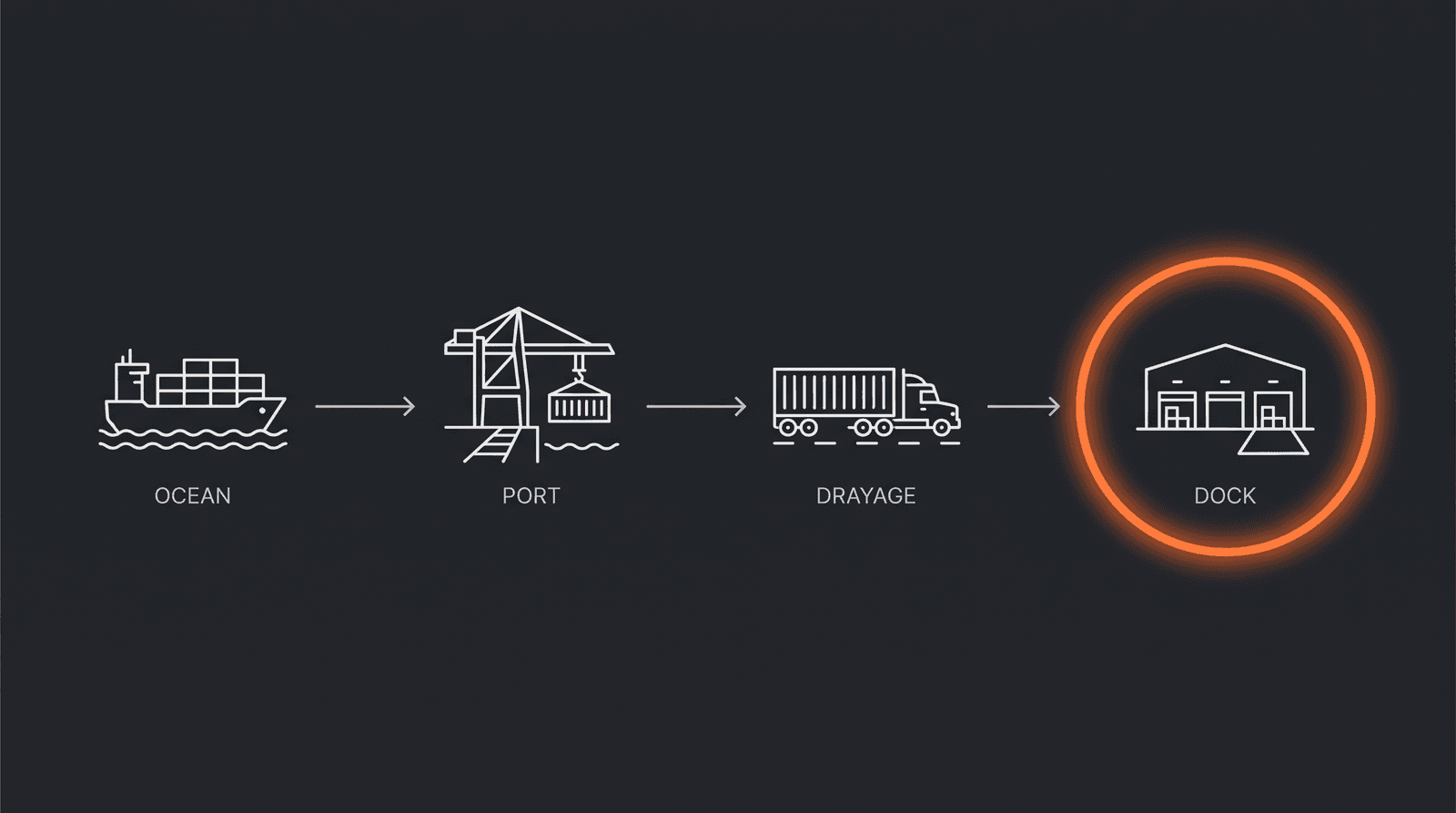
In a normal year, the inbound rush builds through September and October and you brace for it. This year a lot of it already happened. Importers pulled holiday and Q4 inventory forward ahead of the summer's tariff changes, so by late August much of that freight was already sitting in U.S. distribution networks — received, but not yet put away or allocated. The port isn't the constraint anymore. Your receiving dock is. When the building is already full and trucks keep arriving on the same informal schedule they always have, the trucks wait, the floor fills with freight that has nowhere to go, and the receiving team spends the day firefighting instead of processing.
Why this peak season doesn't look like the last one
The National Retail Federation's Global Port Tracker described 2026's import pattern as an early peak that was already winding down by late summer — monthly container volumes that spiked earlier in the year and then softened, as retailers front-loaded inventory ahead of tariff deadlines rather than waiting for the traditional fall ramp. Trade coverage through August 2026 (Supply Chain Dive, WSI's Warehouse Wire) made the same point from the warehouse side: the merchandise that was pulled forward still has to be stored, sorted, and allocated somewhere, and that's landing on distribution centers that were already tight on space. At the same time the freight market tightened into late August — truckload tender rejections climbed toward the low teens from spring lows, and the national diesel average jumped nearly 20 cents in the week of August 24 to its highest level since May (Logistics Management, SONAR). So the inbound pressure is real, capacity to move it is more expensive, and the usual "we'll catch up in the slow weeks" buffer is already spent. These figures come from industry reporting and have not been independently re-verified here; treat them as directional.
~13.5%
all-mode truckload tender rejection rate, late August 2026, up from spring lows (SONAR)
+19.8¢
one-week jump in the U.S. average diesel price, week of Aug 24, 2026 — highest since May (EIA via Logistics Management)
Early peak
NRF's characterization of the 2026 import pattern — front-loaded, then softening
The choke point moved from the port to your dock
When inventory arrives early into a building that's already near capacity, the bottleneck isn't ocean transit or port dwell — it's how many trucks your doors can actually receive and put away in a day. That number is fixed by your door count, your labor, and your putaway speed, and it doesn't rise just because more freight showed up. If the appointment process feeding those doors is informal — call-ins, emails, whoever gets through to the coordinator first — arrivals cluster, trucks queue, and freight that can't be put away immediately gets staged on the floor, which eats the space the next load needs. A structured inbound schedule can't create storage or headcount, but it can match the arrival rate to what the dock and the putaway team can absorb, and it can tell you honestly when the answer to another inbound appointment this week is no.
A concrete scenario: a full building and a fall schedule
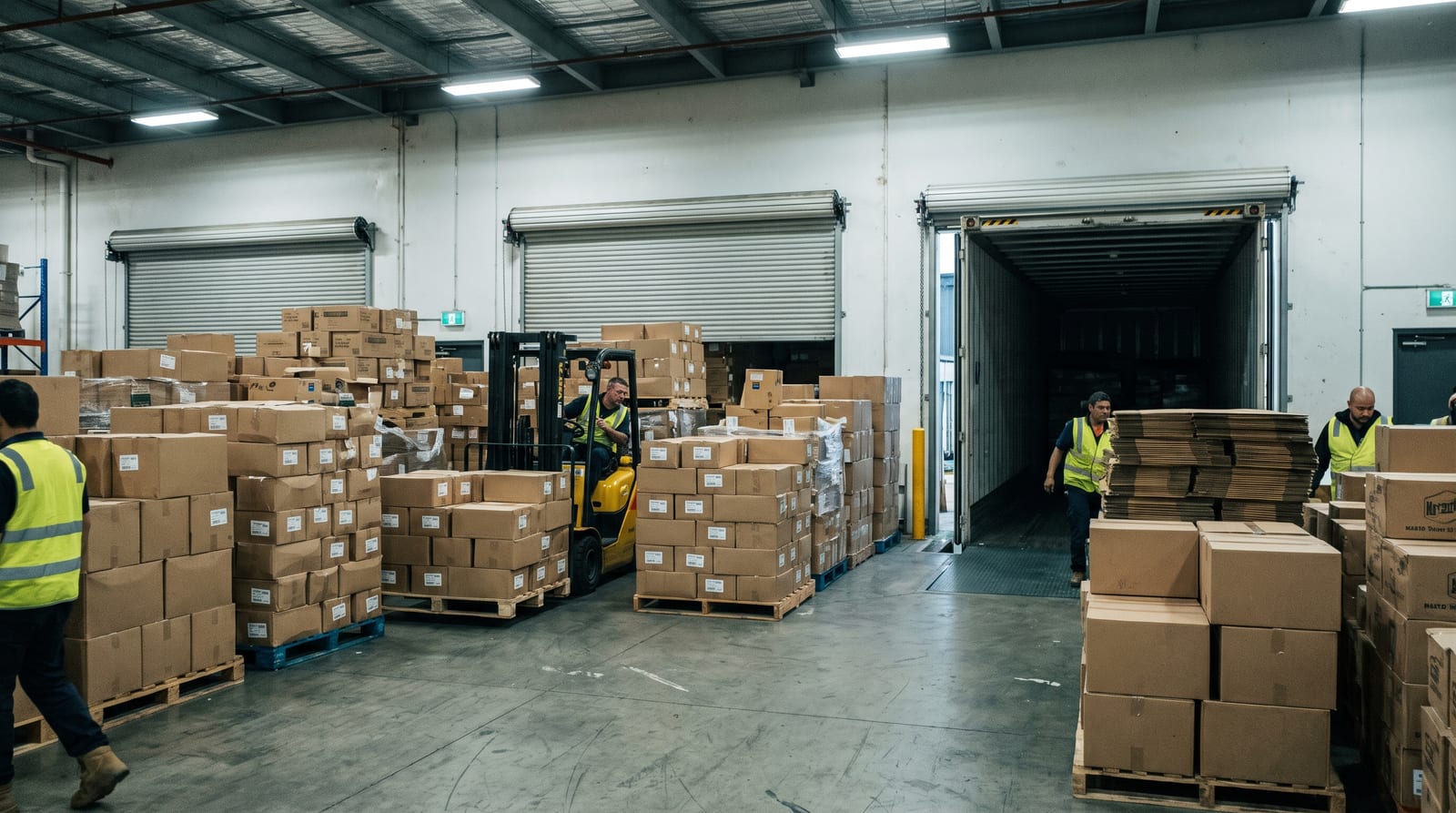
Picture a 55,000-square-foot distribution center serving a regional apparel retailer, eight dock doors, a receiving crew of four. In a normal year the building runs about 70% full through the summer and the team uses those slower weeks to tighten up before the fall inbound ramp.
This year the retailer's buyers moved Q4 orders up by two months to get ahead of tariff changes. By mid-August the DC is at 92% capacity — racking full, two staging lanes now permanently holding overflow pallets, and the reserve area that's normally used for received-but-not-slotted freight is already stacked three high. The fall inbound schedule, built last year, still assumes the building has room to receive 22 trucks a day and put most of it away same-shift.
It doesn't. With no open rack locations, every inbound load has to be staged before it can be slotted, and there's staging space for maybe six loads at a time. On a Tuesday, 14 of the day's 22 trucks are booked before 11:00am — carrier dispatch always pushes for mornings. Five trucks are on site by 9:15. Doors three and four are blocked by staged freight from the day before that nobody's had time to slot. The receiving crew is splitting between unloading and trying to clear rack space to slot what's already staged, and doing neither well.
By afternoon three trucks have waited past their free windows. Two afternoon appointments get pushed to Wednesday, which is already full. The freight that did come off the trucks is now staged in an aisle because the reserve area is full, which means a forklift can't get down that aisle to the pick faces, which slows outbound. The building didn't get smaller and the volume was known in advance — the schedule just never got rebuilt around the space that actually exists.
The mechanism: arrival rate versus absorption rate
Every receiving operation has an absorption rate — the number of trucks it can unload and put away per day without freight piling up. It's set by door count, crew size, and putaway speed, and it drops when the building is full, because staging becomes a required step and staging space is finite.
Peak-season gridlock happens when the arrival rate exceeds the absorption rate and nothing throttles it. Under an informal schedule, the arrival rate is set by carrier dispatch preferences — which means mornings, clustered. When that rate runs above what the dock can absorb, the overflow doesn't disappear; it becomes floor freight, and floor freight consumes the space the next load needs. The gap compounds through the shift and rolls into the next day.
A structured inbound schedule works on exactly one thing here: it makes the arrival rate a number you set instead of a number carrier dispatch sets. You cap appointments at your real absorption rate, spread them across the full operating day, and hold the line when the day is full. It doesn't make the absorption rate higher — that takes space or people — but it stops arrivals from overwhelming it.
What scheduling can't do here
Be direct about the boundary. A dock schedule does not:
- Create storage. If you're at 92% and inbound exceeds outbound for the quarter, you have a space problem. Scheduling paces the inflow; it doesn't hold the inventory. Getting more throughput when you can't lease more space covers that trade-off.
- Manage allocation or inventory strategy. What gets received, in what quantity, and when it ships out are decisions made above the dock office.
- Replace a yard. If trucks are stacking up in your lot waiting for doors, staging trailers in the yard is a real lever — but Yard Management is listed as "Coming Soon" in Dock-Scheduler, not a shipped feature.
If your Q4 problem is fundamentally that more is coming in than going out, scheduling buys you an orderly dock while you solve the real constraint. It doesn't solve it for you.
The fix, mapped to what's shipped
Dock-Scheduler gives you control of the inbound arrival rate:
Carrier self-booking from live availability. Carriers book the open windows that are actually open, which naturally spreads arrivals across the day instead of stacking them before 11:00am.
Facility-based scheduling by dock door. Appointments are capped and assigned per door, so you can set the day's inbound count at your real absorption rate and see when it's reached.
Real-time appointment visibility. The coordinator sees the day is full before accepting the next request — the difference between pacing inbound and discovering the gridlock at 9:15am.
Timestamped check-in workflows. Check-in data shows which time blocks and doors consistently run long, so next week's cap is based on what actually happened, not last year's assumption.
None of this is auto-optimization — there's no engine rescheduling your trucks. It's the structure to run inbound deliberately during the weeks when a loose process has no slack left to hide its mistakes. If you're heading into Q4 still coordinating by phone and spreadsheet, the problems that creates get sharper under peak volume, not softer.
Frequently Asked Questions
Why is 2026 peak season different for warehouse receiving?
Because much of the peak-season inventory arrived early. Importers front-loaded holiday and Q4 goods ahead of 2026's tariff changes rather than waiting for the traditional September-October ramp, per NRF's Global Port Tracker and trade coverage through August 2026. That means the receiving surge many distribution centers plan for in the fall partly already happened over the summer, into buildings that were already tight on space — and the freight still needs to be stored, sorted, and allocated. The constraint shifted from port capacity to dock and putaway capacity.
How do I schedule inbound receiving when my warehouse is already full?
Start by defining how many trucks your doors and putaway team can actually process per day when the building is near capacity — that's lower than your theoretical door count, because freight that can't be put away immediately has to be staged, and staging space is what you're short on. Then cap inbound appointments at that rate and spread them across the full operating day rather than accepting a morning cluster. Use real-time visibility of what's already booked so a coordinator can see the day is full before saying yes to another request, and use check-in data to see which time blocks are consistently running long.
Does dock scheduling software create more warehouse capacity?
No. It doesn't add square footage, dock doors, or headcount. What it does is get more usable throughput from the doors and staff you have, by matching the inbound arrival rate to what the dock can absorb and preventing the clustering that turns a full building into a gridlocked one. If your facility is genuinely over capacity regardless of how well the schedule is run, that's a space or staffing problem, and scheduling software will make it visible sooner but won't solve it.
What happens if I just keep taking inbound trucks on the old informal schedule?
The predictable failure mode: trucks cluster in the morning because that's what carrier dispatch prefers, several arrive at once, doors back up, and loads that can't be put away right away get staged on the floor. That staged freight occupies the space the next truck's load needs, so the problem compounds through the day. Trucks wait past their free windows and bill detention. The receiving team spends the shift reacting instead of processing, and the backlog rolls into the next day.
How does the tight 2026 freight market make this worse?
Truckload capacity tightened into late August 2026 — tender rejections rose toward the low teens from spring lows — and diesel spiked in the week of August 24 to its highest level since May (SONAR, EIA via Logistics Management). That means the trucks bringing freight to your dock cost more and are less flexible about timing, and any truck that sits waiting for a door is more expensive to detain. A predictable dock schedule doesn't lower freight rates, but it stops your facility from adding avoidable detention cost on top of an already expensive market.
Is inbound scheduling only useful during peak season?
No — but peak season is when the cost of not having it shows up fastest. The mechanism is the same year-round: match arrivals to putaway capacity, spread them across the day, keep visibility into what's booked. During a normal-volume month a loose process has enough slack to absorb its own mistakes. When the building is full and the freight market is tight, that slack is gone and the same loose process produces gridlock.
Match Your Inbound Schedule to the Space You Actually Have
You can't lease a bigger building before Q4. You can cap inbound appointments at what your dock and putaway team can absorb, spread arrivals across the day, and see a full day before you overbook it. Dock-Scheduler does that for $149.99/month flat, unlimited facilities, no demo.